
National Safe Work Month takes place every October, providing an opportunity for workplaces across Australia to put work health and safety (WHS) in the spotlight. In 2026, the theme is simple but important: Safe work is for life.
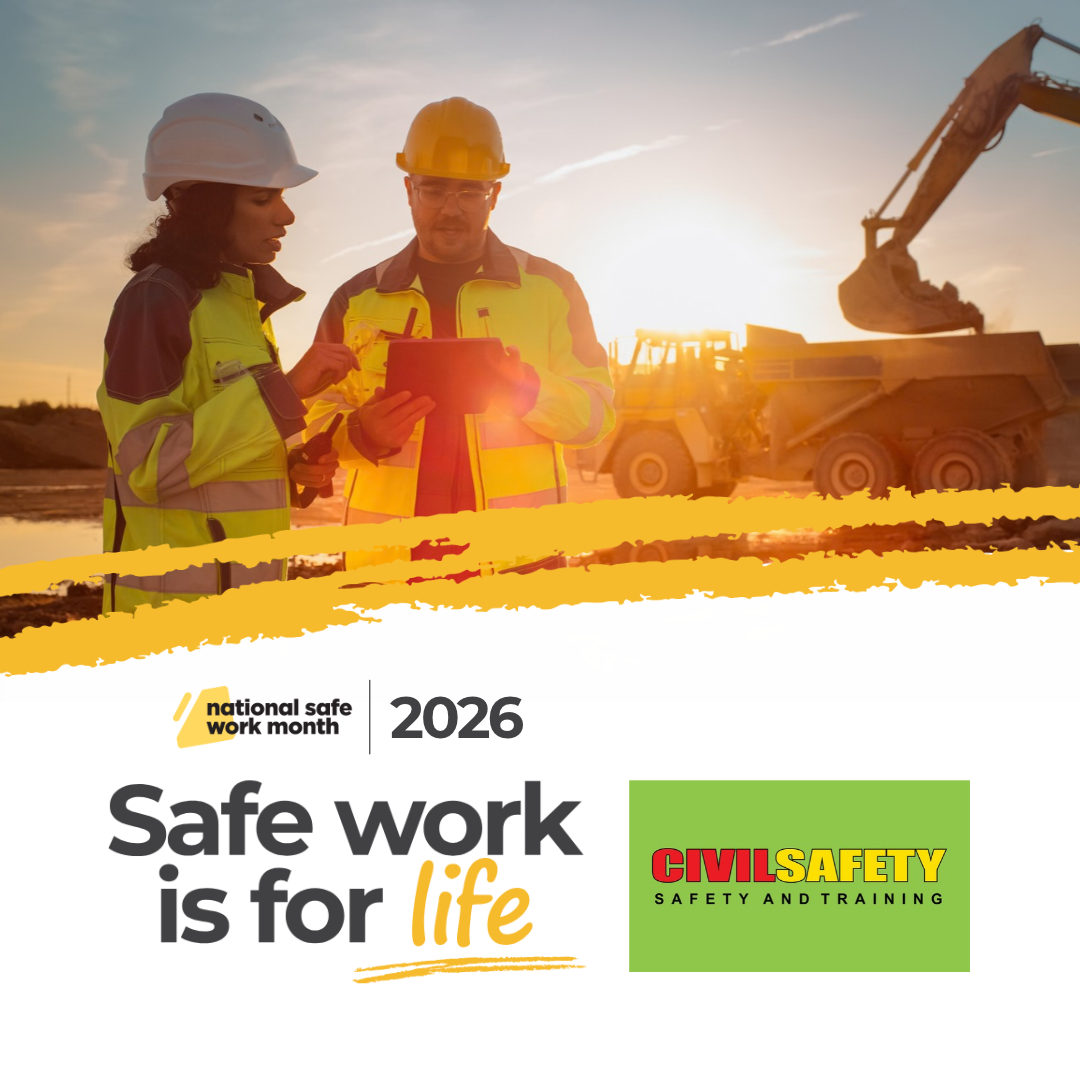
National Safe Work Month 2026
This October, Civil Safety is proud to support National Safe Work Month, encouraging workplaces across Australia to focus on safe and healthy work.
The theme ‘Safe work is for life’ highlights that workplace safety is about more than preventing an incident today. It is about protecting people's lives, health and future throughout their working lives.
For workers in industries such as construction, civil construction, mining, transport and logistics, where people may work around heavy machinery, vehicles, equipment and other hazards, making safety part of everyday work is essential.
What is National Safe Work Month?
National Safe Work Month is an annual campaign held throughout October to encourage Australian workplaces to focus on WHS and take action to reduce work-related injuries, illnesses and fatalities.
Safe Work Australia has run the national campaign each October since 2009. The 2026 campaign focuses on creating safe and healthy work for all and encourages workplaces to have meaningful conversations about safety and take practical action.
The 2026 theme, Safe work is for life, reminds us that the impact of workplace safety extends beyond the end of a shift.
A workplace incident can affect a worker's health, family, finances and ability to work in the future. Creating a safer workplace therefore benefits not only employees and employers, but also families and communities.
Why does workplace safety matter?
According to Safe Work Australia's latest available data, 188 workers were fatally injured at work in Australia in 2024. There were also 146,700 serious workers' compensation claims in 2023-24, equivalent to more than 400 serious claims each day.
Behind every statistic is a person.
Workplace safety is about making sure workers can perform their jobs without unnecessary exposure to risks that could result in injury, illness or death.
This means safety needs to be considered when work is:
Planned and organised
Carried out on site
Supervised and managed
Performed around plant and machinery
Completed under changing conditions
Reviewed after hazards or incidents are identified
Safety is not something that should only be discussed after an incident. It needs to be part of everyday decisions.
Safe work is for life
The 2026 theme encourages workplaces to think beyond immediate safety outcomes.
A safe workplace can help protect a worker's:
Life
The most important reason for workplace safety is preventing fatalities and serious harm.
Every worker should be able to finish their shift and return home safely.
Health
Workplace hazards can have both immediate and long-term effects. Physical hazards, exposure to hazardous substances, fatigue and psychosocial hazards can all affect workers' health.
Good WHS practices help identify and manage risks before they cause harm.
Future
An injury or illness can have consequences that continue long after a worker leaves the workplace.
Supporting safe work means considering the long-term impact of workplace conditions and making improvements that help protect workers throughout their careers.
Safety starts with identifying hazards
One of the most important parts of workplace safety is recognising hazards before they cause harm.
Depending on the workplace, hazards may include:
Moving vehicles and mobile plant
Heavy machinery
Falls from heights
Lifting and manual handling
Electrical hazards
Hazardous chemicals and substances
Noise and vibration
Working in confined spaces
Fatigue
Heat and environmental conditions
Psychosocial hazards
The risks will vary between workplaces, so workers and employers need to consider the specific tasks, equipment, environment and people involved.
Identifying a hazard is only the first step. The next step is assessing the risk and implementing appropriate controls.
Training plays an important role in workplace safety
Training is an important part of building the knowledge and skills workers need to perform their jobs safely.
For workers operating plant and machinery, appropriate training can help develop practical skills and an understanding of safe operating procedures, hazards and workplace requirements.
Depending on the role and equipment involved, this may include training in areas such as:
Training should be supported by appropriate supervision, procedures, risk controls and workplace consultation. Completing a course is not a substitute for managing risks on site, but it can be an important part of developing a competent and safety-conscious workforce.
Making safety part of everyday work
National Safe Work Month is a good opportunity for workplaces to review how safety is managed every day.
Here are some simple ways to get started:
1. Talk about safety
Use toolbox talks, team meetings or informal conversations to discuss workplace hazards and potential improvements.
2. Review workplace risks
Look at current tasks, equipment and working conditions. Consider whether existing controls are still effective.
3. Encourage workers to speak up
Workers often have valuable practical knowledge about the risks involved in their jobs. Creating opportunities for genuine consultation can help identify issues that may otherwise be missed.
4. Keep skills and knowledge current
Consider whether workers have the training, experience and information they need to perform their roles safely.
5. Learn from incidents and near misses
An incident or near miss can provide an opportunity to identify what went wrong and what can be improved.
6. Make safety part of planning
Safety should be considered before work begins, not only once a task is underway.
The four focus areas for National Safe Work Month 2026
Throughout October, Safe Work Australia is exploring four weekly focus areas:
These themes provide a useful framework for workplaces to start conversations, review their safety practices and identify practical improvements.
What can your workplace do this October?
National Safe Work Month doesn't have to mean a major workplace event.
A simple toolbox talk, safety discussion, hazard review or training activity can be a useful starting point.
Safe Work Australia's 2026 campaign resources include posters, digital assets, discussion prompts, videos and an activity kit designed to help workplaces get involved throughout October.
The important thing is to turn the conversation into action.
Ask your team:
What are we working safely for?
It could be a family, a future career, good health, financial security or simply being able to enjoy life outside of work.
Whatever the answer, it is a reminder that safety doesn't stop when the workday ends.
Safe work is for life
National Safe Work Month 2026 is an opportunity to look at workplace safety from a long-term perspective.
Safe work is about more than avoiding accidents. It is about protecting people today while supporting their health, wellbeing and future.
By identifying hazards, managing risks, encouraging consultation and investing in appropriate training, workplaces can take practical steps towards creating safer and healthier environments.
This October, take the opportunity to start a conversation about safety in your workplace - and keep that conversation going all year round.
At Civil Safety, we provide nationally recognised training and safety courses for workers and businesses across Queensland and Western Australia.
Build skills. Build confidence. Build a safer workplace.