
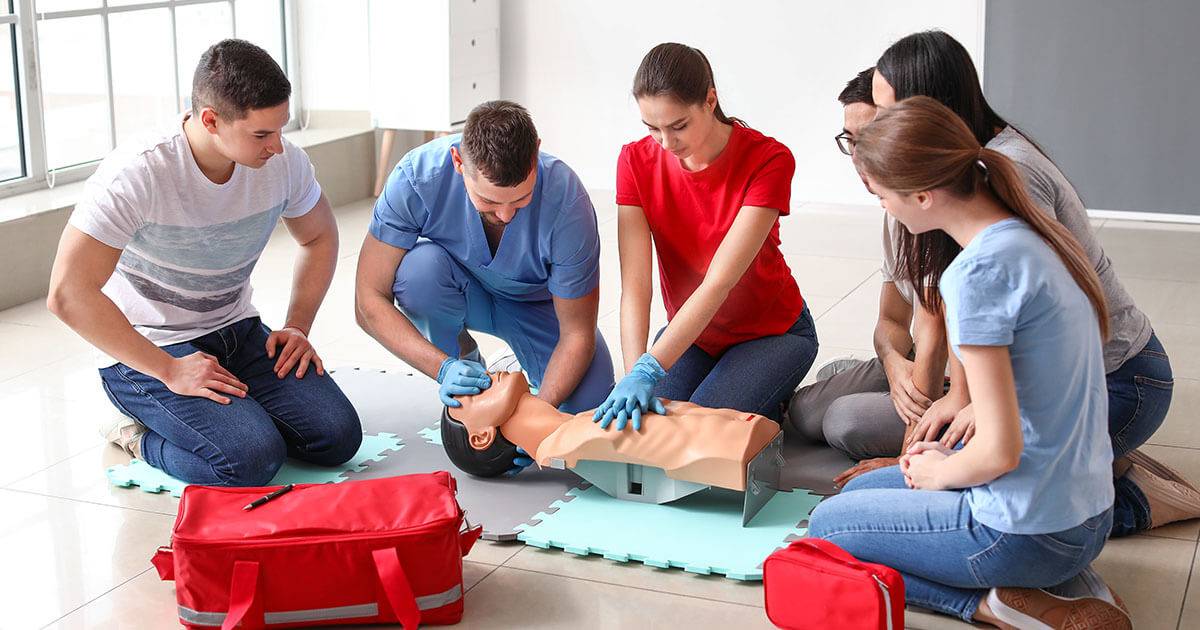
Cardiopulmonary resuscitation (CPR) keeps blood moving to the brain and vital organs when someone’s heart stops. The person applying the compressions buys the minutes necessary to keep the person alive until paramedics arrive.
Those minutes are especially important on a mine site or civil project outside a major city. Queensland Ambulance Service data shows that when someone witnesses a collapse and starts CPR right away, nearly 40% of those patients make it out of the hospital alive. You could be the reason a workmate goes home safe, as long as you know what to do.
The nationally recognised course that teaches you that is HLTAID009 Perform Cardiopulmonary Resuscitation. This guide covers what you’ll learn, how to get certified, how often you need to renew, and why so many employers expect it.
How to perform CPR
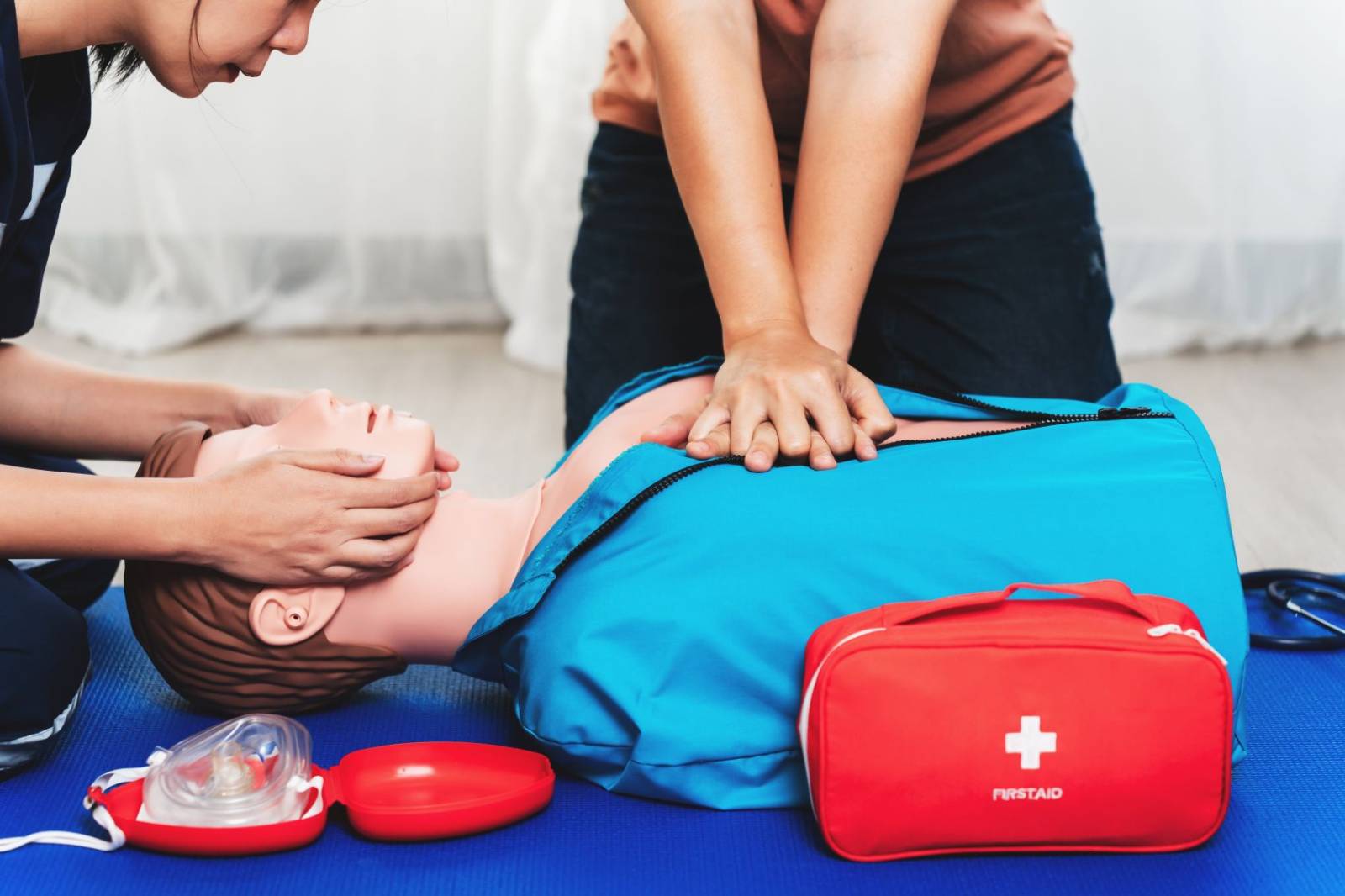
The HLTAID009 course teaches you how to perform CPR and gives you the hands-on practice to do it under pressure. Here’s what that sequence looks like:
Recognise the emergency: You’ll learn to check for danger, assess whether the person responds, and confirm they’re not breathing normally. Getting this right in the first few seconds can make a big difference.
Call triple zero: Emergency services need to be on their way before you start compressions. If someone else is nearby, send them to make the call and find the closest defibrillator while you begin.
Start chest compressions: Hand position, compression depth, rate, and how you let the chest recoil between compressions all affect whether your CPR will work. Your trainer will assess your technique on a manikin until you can sustain effective compressions without stopping.
Use an AED as soon as possible: An automated external defibrillator gives you voice prompts for each step. You’ll practise attaching the pads correctly and learn to recognise when the device tells you to deliver a shock.
Reading through the sequence is helpful, but it’s never the same as doing it. The course puts you through it physically, which is what makes the difference when you’re kneeling next to a workmate on site.
How to get certified in CPR

Getting your CPR certification takes four steps and one day of your time. This is how to get your CPR certification:
Enrol in the HLTAID009 course: Book the Perform Cardiopulmonary Resuscitation course. There are no prerequisites, so you don’t need any prior first aid training to get started.
Complete the online theory module: You work through this at your own pace, with 30 days from enrolment to finish. It covers the knowledge side, including how to recognise cardiac arrest and what the chain of survival involves.
Attend the face-to-face practical session: This takes roughly four to six hours. You’ll practise your compressions and AED use on a manikin with a trainer helping along the way.
Pass both assessments: You need to complete the theory and practical assessments to qualify. Once you pass, you’ll receive a nationally recognised Statement of Attainment.
Many workers complete CPR along with the full First Aid Course (HLTAID011) since most sites expect the full sequence.
How often should CPR be renewed?
Every 12 months. The Australian Resuscitation Council and Safe Work Australia both recommend an annual refresher to keep your skills current with the latest resuscitation guidelines.
Some workplaces want it more often than that, especially in high-risk industries. Your site’s training matrix is what actually governs your renewal date, so check with your employer before assuming that the 12-month cycle applies everywhere.
If you hold full first aid (HLTAID011) as well, you’re going to have to track two separate dates. The HLTAID011 certification runs on a three-year cycle while the CPR component within it still needs to be refreshed every 12 months. Workers often let the CPR component lapse without realising their first aid certificate is technically still current.
Why CPR matters in civil, construction, and mining work
Queensland Ambulance Service paramedics attended 6,787 out-of-hospital cardiac arrests in 2023/24. The Northern Region, which covers Mackay, recorded one of the highest incident rates in the state at 152 per 100,000 people, well above the 105 per 100,000 in Metro North.
Distance is what makes those numbers extra troublesome for anyone working outside a major city. Research across Australian local government areas found bystander CPR rates ranging from 45 to 75%, with the lowest rates concentrated in regional and remote areas. Those same areas also recorded the highest cardiac arrest rates in the country, which makes it even more important to have more CPR-qualified residents there.
Get CPR certified with Civil Safety in Mackay
Civil Safety (RT 32381) offers HLTAID009 Perform Cardiopulmonary Resuscitation at our Mackay training facility and across our other Queensland and Western Australia locations. You’ll practise on adult and infant manikins with a trainer assessing your technique until they’re confident you can do it under pressure, which is what makes the difference on the day you actually need it.
Contact us to book your CPR course or ask about group training for your crew. If you’re working in WA’s construction industry, you may also be eligible for CTF funding to cover most of the course cost.
Frequently asked questions
It takes about a day of your time in total. You first complete an online theory module within 30 days of enrolling, then attend one day of face-to-face practical training that lasts roughly four to six hours. Both are required to pass.
Every 12 months. The Australian Resuscitation Council and Safe Work Australia both recommend an annual refresher. Some high-risk workplaces require it more often, so check with your employer.
No. CPR (HLTAID009) is a standalone unit that covers rescuscitation and AED use. Full first aid (HLTAID011) covers a much broader range of skills. Many workers complete both, with the differences explained in our guide on getting a first aid certificate in Australia in more detail.
Often, yes. Many employers in these industries expect workers to hold current CPR certification, particularly on remote or high-risk sites where professional help takes longer to arrive.